Charted vs. BILL
Charted keeps your data in NetSuite
Complete AP automation entirely within NetSuite—no external systems, no data duplication, no vendor lock-in. Charted powers the full AP lifecycle directly inside NetSuite, from invoice capture through approvals, payments, and accruals. Everything happens where your financial data lives, maintaining NetSuite as your single source of truth without the sync failures and data ownership concerns that external platforms create.
Why finance teams choose Charted over BILL
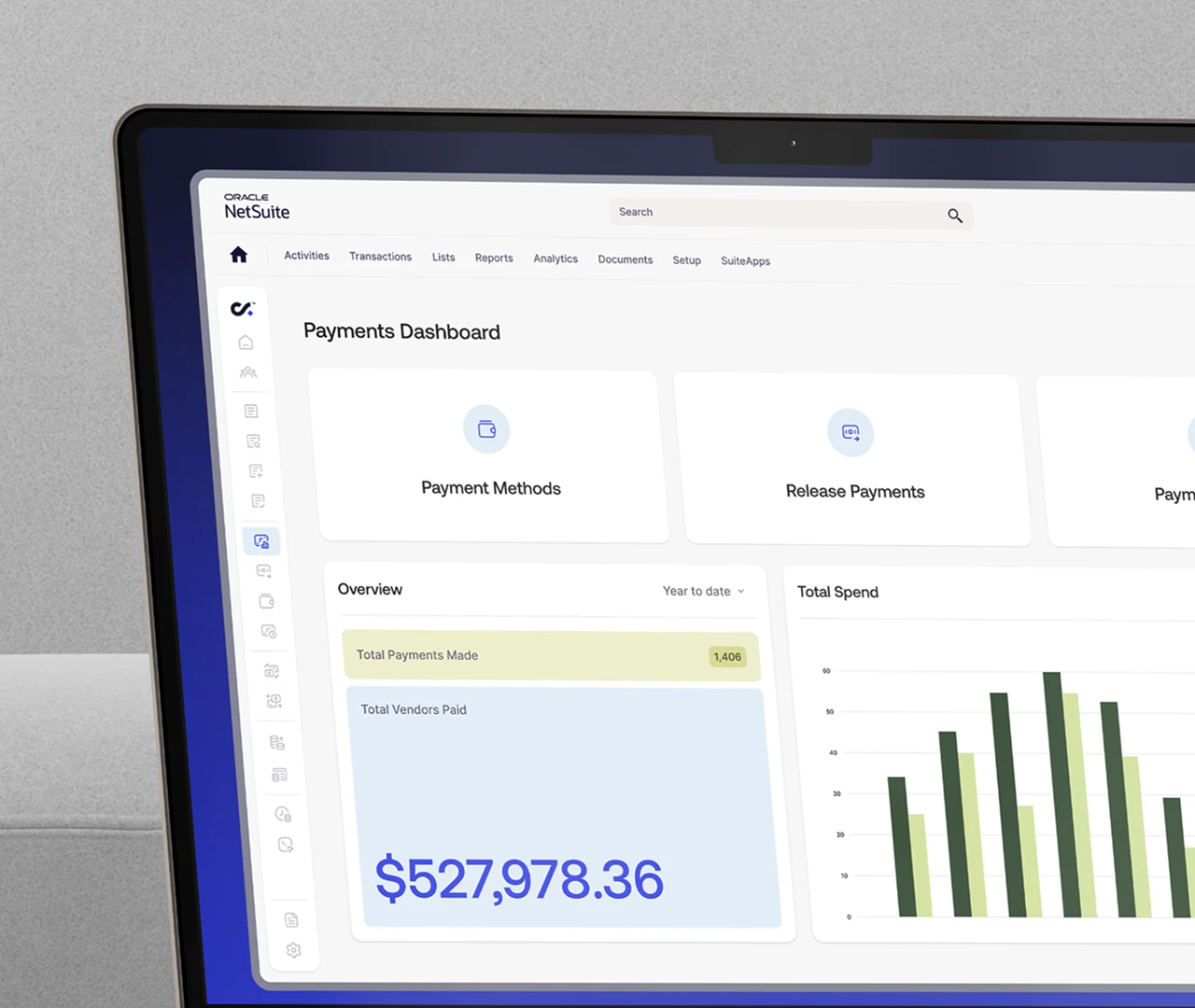
NetSuite-native architecture eliminates sync failures
Charted operates entirely within NetSuite with no external systems or data synchronization to maintain—eliminating the integration challenges, sync failures, month-end close delays, data consistency issues, and reporting gaps that BILL’s external platform creates.
Superior Invoice AI with license-free approval workflows
Charted delivers superior Invoice processing accuracy with sophisticated approval workflows at usage-based pricing. BILL’s externally hosted invoice capture and approval routing can struggle with complex NetSuite scenarios and per-user pricing can escalate costs rapidly.
Complete data ownership without vendor
lock-in
Charted ensures you own your vendor data completely, with all information living in NetSuite under your control. BILL’s network model keeps vendor data in their system, creating data migration challenges when you want to leave.











Where Charted excels
NetSuite-native architecture eliminates integration complexity
Charted provides embedded finance directly in NetSuite with no connectors, APIs, or sync jobs to maintain, keeping all AP activity real-time and minimizing IT risk. BILL relies on continuous synchronization with NetSuite, increasing system dependency and reconciliation work when sync failures occur.
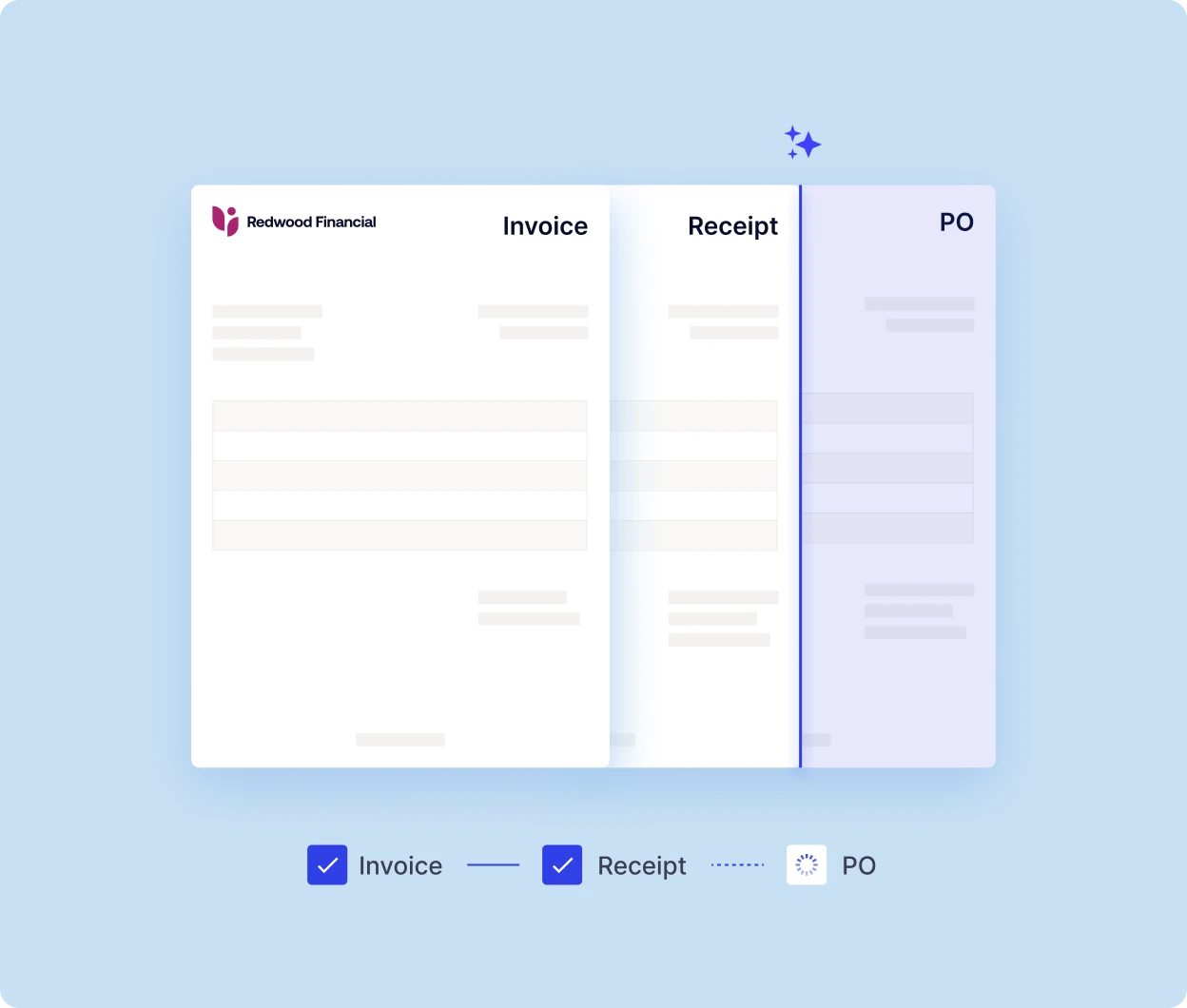
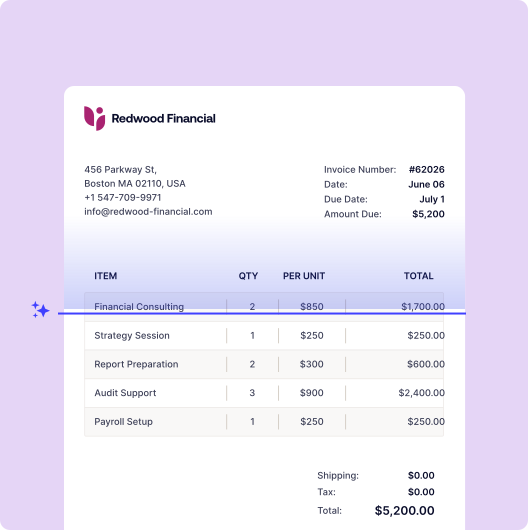
Invoice automation that understands your NetSuite account
Charted Invoice AI runs natively inside NetSuite, so it learns your exact subsidiaries, departments, classes, custom segments, and vendor-specific GL rules over time. It can reliably populate and update native and custom fields on vendor bills using your NetSuite configuration as the source of truth—no external mapping layer or duplicated field model to maintain.
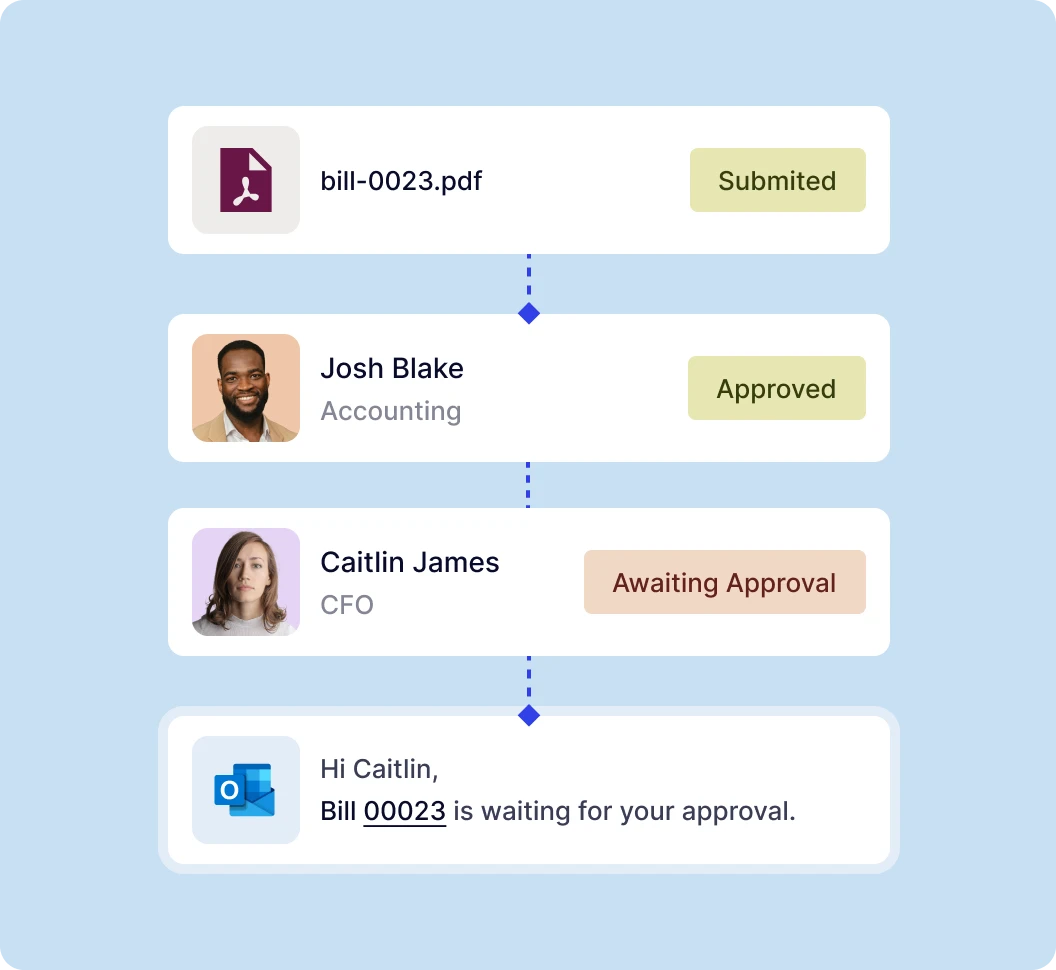
Superior approval workflows and cost-effective scaling
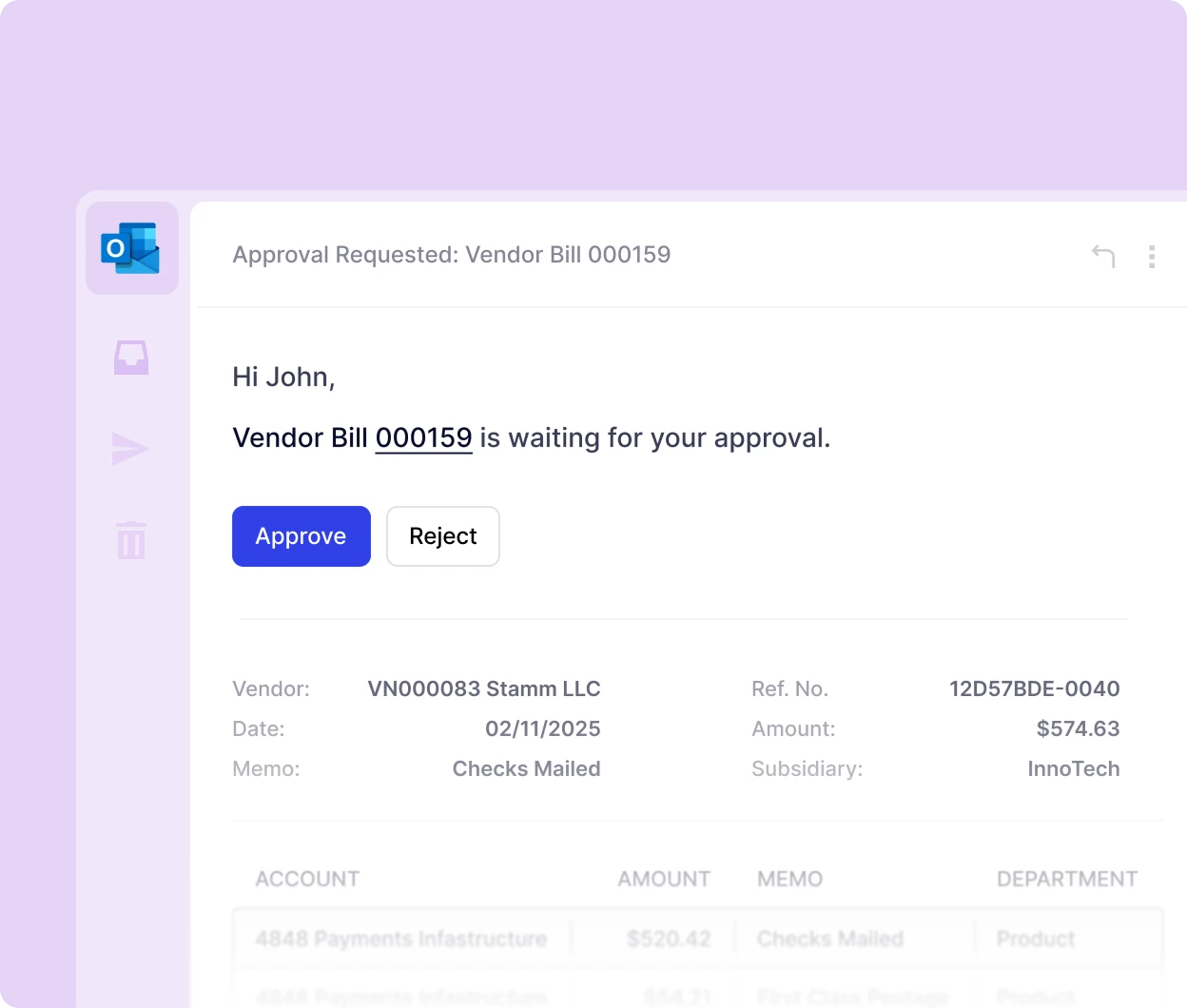
Charted uses NetSuite’s full data model to route invoices through multi-step, conditional and customizable approval workflows. Approvers interact through email without needing NetSuite licenses, keeping costs flat as approval participation expands. BILL’s workflow designer is more limited and requires per-user licensing for approvers. As organizations grow, approval costs grow with them.
Complete control over payments and fees
Charted supports ACH, outsourced check printing at $1.50 per check, and international wires directly from NetSuite. Pricing is usage-based without per-transaction payment fees. BILL charges per-transaction fees across all payment types—ACH, checks, wires—and applies percentage-based expedited payment fees that can substantially increase total spend at scale.
Lower total cost of ownership than external AP platforms
The NetSuite-native approach Charted employs removes the hidden costs that can come with running BILL alongside NetSuite, like integration maintenance, reconciliation work when syncs break, and extra time spent during audits to chase mismatched records. Some teams moving from integration-based AP tools have reported cutting days off of reconciliation efforts each month after consolidating everything in NetSuite.
Customer success story


Frequently asked questions
The main difference between Charted and BILL for NetSuite is that Charted runs entirely inside NetSuite as a native SuiteApp. BILL is an external platform that syncs data to and from NetSuite through APIs.
Daily workflows differ between Charted and Bill. With Charted, AP teams operate entirely inside NetSuite. With BILL, teams switch between BILL for AP tasks and NetSuite for financial reporting.
Charted stores AP data in native NetSuite objects. BILL stores AP data in its external platform and syncs records back to NetSuite.
Charted requires zero integration maintenance with NetSuite. BILL requires ongoing upkeep of its API, which can often lead to monitoring, troubleshooting, and reconciliation support.
Charted offers advanced approval routing without per-user license fees. BILL charges per approver on a monthly basis.
Charted Invoice AI runs directly inside your NetSuite account, so it works against your live segments, custom fields, and approval logic instead of a generic external model. That makes it easier to maintain accurate coding and keep vendor bills aligned with how your NetSuite environment is actually configured.
Vendor data ownership is under your full control with Charted; Advanced Vendor Onboarding delivers your vendor’s info directly into NetSuite.
Charted payment processing costs come out lower than BILL for AP teams, with more competitive pricing for domestic payments (ACH and check payments) and meaningfully lower fees on cross‑border payments.
With Charted, month-end close happens entirely inside NetSuite with real-time accuracy. With BILL, teams must verify data consistency between systems before closing.
NetSuite-native Charted AP automation brings significant reporting advantages. One example is a vendor aging or spend-by-department report that needs to tie invoices and payments together by department, location, or class. Charted keeps those dimensions on native payment records, so the report works out of the box. BILL’s payments don’t support these classifications in NetSuite, which means finance teams must fix or recode payments before the report is usable.
BILL’s Intelligent Payment Automation brings approvals into the NetSuite UI, but the underlying payment records still do not support departments, locations, or classes. That means the integration improves workflow convenience, not the dimensional completeness of your NetSuite reporting.